Quick Summary
When choosing a surface for an interior project, it's easy to get caught up in colours, finishes and textures. But the surface also has to work well once the furniture is in use. Its appearance can be affected by scratches, moisture, and heat.
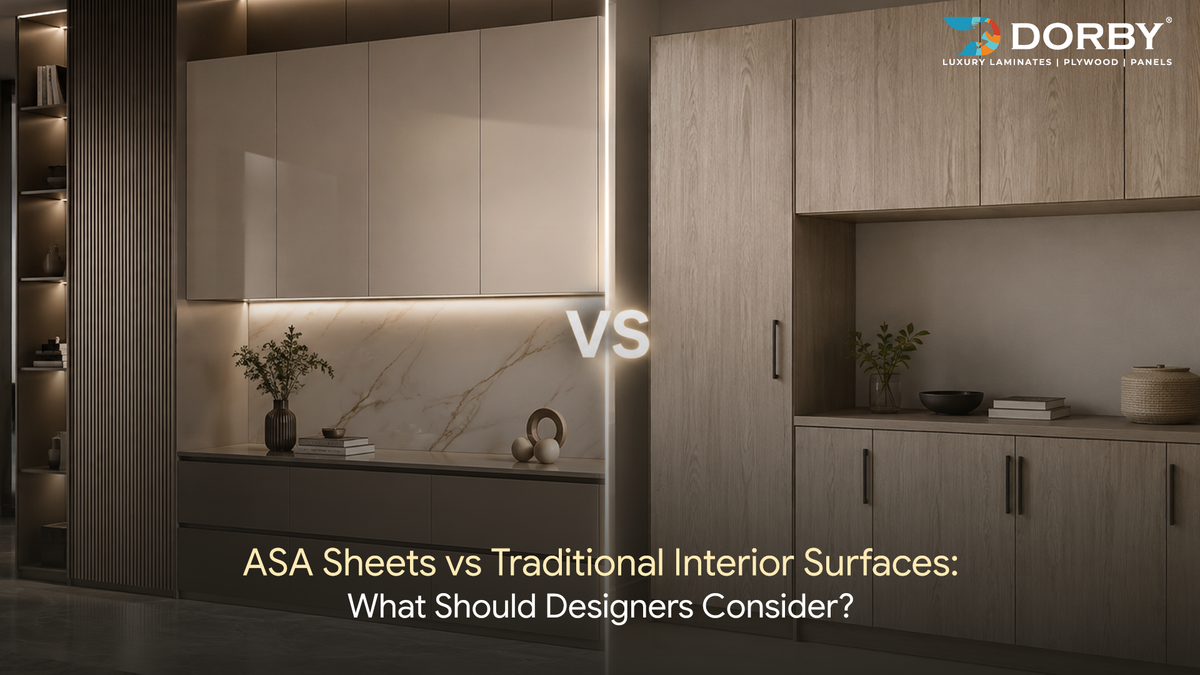
This is where ASA sheets and traditional interior surfaces can be compared. Both have their own place in interiors, but they are not meant to solve the same problem.
Understanding ASA Sheets
ASA stands for acrylonitrile styrene acrylate, its resistance to weathering and UV exposure. They are mostly considered when the surface needs to handle more weather-changing conditions.
For designers, this can be useful in areas where sunlight, moisture or changes in temperature are a concern. This does not mean that ASA should automatically replace traditional interior surfaces. For a TV unit, wardrobe or study table, a good-quality decorative surface may perform well.
Importance of Traditional Interior Surfaces
Traditional interior surfaces cover a wide range of materials, such as laminate, veneers, paints, acrylic finishes and different types of sheets which are commonly used on furniture and interiors.
A plastic laminate sheet, e.g., is a known option for cabinets, tables, wardrobes and other furniture. These are available in a wide range of colours and patterns and are easy to maintain.
Similarly, thermo-laminate can be considered when designers want a surface with a different look and feel. The final choice comes down to the furniture, the expected use, and the finish required.
What about ASA laminates
When you are looking for both appearance and resistance, then ASA laminates are worth considering. They are useful where the surface faces sunlight and moisture more often than in an indoor application.
However, designers should avoid choosing a material just because it sounds advanced. If a piece of furniture is placed inside a bedroom and does not face sunlight, a standard laminate can be a good and cost-effective option.
Comparison Before Installation
A surface may look perfect in a sample book, but the real test begins after installation.
Designers should always consider a few points:
- Will it come in regular contact with water or moisture?
- How easily can the surface be cleaned?
- Will scratches and fingerprints be noticeable?
- What is the expected maintenance?
- Does the price make sense for the project?
These questions are often useful when comparing the material against another.
Durability or Design Flexibility: Which One Is Preferable
The best-looking material cannot always be the best material for the interior. This is one of the areas where traditional surfaces have an advantage. There are many laminate finishes available, from wood- and stone-inspired designs to solid colour textures and high-gloss options. Their versatility makes them easier to fit into different interior styles.
When you want durability and resistance, ASA surfaces can also provide a modern appearance. But designers still need to check the available designs, colours, textures, thicknesses, and areas of installation before making a decision.
Is ASA a Better Option
Every corner of the room has its own requirements. For areas that are exposed to sunlight and moisture, ASA can be useful. For indoor furniture, traditional laminates offer enough durability without increasing the material cost.
The same goes for thermo-laminates or plastic laminate sheets. Each one has its own purpose, appearance and performance factors.
A good interior design is usually about appearance, performance, budget, and how the furniture will be used.
Frequently Asked Questions (FAQs)
1. What are ASA sheets used for?
ASA sheets are mainly applied where resistance to UV exposure, changing weather conditions and moisture is important.
2. What is a thermo-laminate?
Thermo-laminate is a type of decorative surface used in interior applications. It is preferred when the interior requires a specific finish, texture or appearance.
3. Is an ASA sheet better than a plastic laminate sheet?
Both sheets have their own features. ASA sheets are made from a different material and resist UV and weathering. Plastic laminate sheets are used for decorating interior furniture and come in many finishes.